
2020
Interdisciplinary research project and exhibition combining arts-based research with academic theory. Featuring the participation of Jad Khairallah and Zohar Iancu (PhD. Universidade Catolica Portuguesa). Residency and exhibition taking place at the Hangar Centre for Artistic Investigation, Lisbon in collaboration with the Melbourne Institute for Experiential and Creative Art Therapy, Australia. Project supported by the Ian Potter Cultural Trust, Australia.
Project Aims
An Indefinite Series of Discontinuous Acts proposed to explore how arts-based research methods can deepen inquiry into critical theory, with a specific focus on emergent themes in Culture Studies. Engaging the Form of Inquiry (FOI) method as developed by the Melbourne Institute of Experiential and Creative Art Therapy (MIECAT) in relation to the theses of Universidade Catolica Portuguesa PhD candidates Jad Khairallah and Zohar Iancu the project aimed to uncover and present the potentialities of arts-based approaches to academic practice in creating and disseminating inclusive and multi-sensorial forms of knowledge.
Responding to the increasing awareness of the role of creative and arts-based approaches in assisting international community and social development, the project also worked to identify methods of intercultural meaning-making as relevant to, and accessible by, both creative and academics disciplines, as well as the surrounding communities.
Undertaken over 12 months of on-site inquiry, the project culminated in an exhibition hosted at the Hangar Centre for Artistic Investigation, Lisbon, accompanied by an online panel discussion led by Dra. Luisa Santos for the Lisbon Consortium/Universidade Catolica Portuguesa Faculty of Crsulture Studies. The research findings also formed the basis of the MIECAT Masters Thesis of Nithya Iyer.
Collaborators
Jad Khairallah holds a PhD in culture studies from Universidade Católica Portuguesa (UCP)
with a Master of Arts in Design from Notre Dame University-Lebanon. Khairallah’s work centers on exploring the intersection of shock, culture, and queerness, in the case of Lebanon. His thesis examines how individuals navigate continuous shocks and instabilities while exploring the concept of desensitization in Beirut. The research tackles the shocking power that non-normativity imposes on established cultural concepts, particularly concerning the queer body and the communicative practices of shock tactics prevalent in media, culture and the arts. Khairallah’s interdisciplinary approach encompasses queer theory, intersectional feminism, and Middle Eastern studies, as well as an interest in arts-based research.
Zohar Yanko holds a PhD in culture studies from the Universidade Católica Portuguesa (UCP), a B.A in Psychology and Sociology from The Academic College of Tel Aviv-Yaffo and M.A from Universidade Católica Portuguesa (UCP) in Culture Studies – Performance and Creativity. Additionally, she holds a diploma of Research and Documentary Screenplay from the Open University of Israel. She is currently a Doctorate student at UCP in Culture Studies with a research focus on the case of the recent immigration wave of Israeli citizens to Portugal. She finds much interest in creative and Performative research, Visual Culture and Feminist Theories. In recent years she works on the theme of symbolic boundaries and the way they act to shape and influence cultural, political, mental and physical realities.
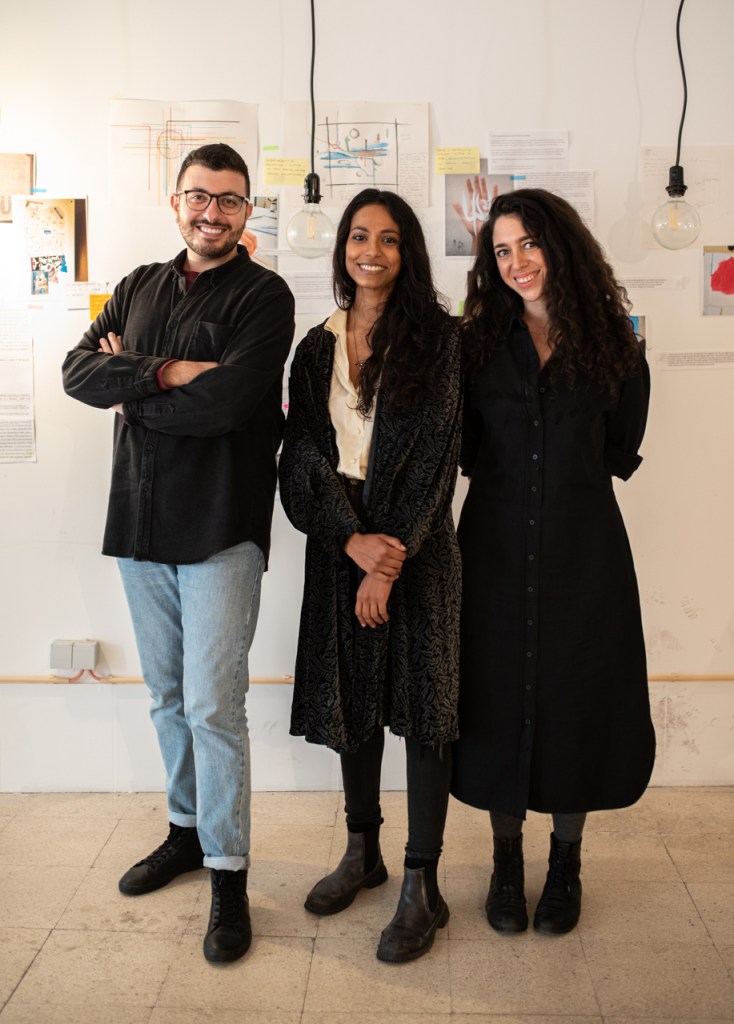
Research process
The MIECAT Form of Inquiry (FoI) is an experiential methodology grounded in phenomenological arts-based processes. Devised by Dr Warren Lett and Dr Jan Allen
(founders of the Melbourne Institute of Experiential and Creative Art Therapy) as based on the work of Maurice Merleau-Ponty, Edmund Husserl and David Abrams, FoI comprises a series of procedures (protocols/exercises) facilitated to elicit arts-based data, knowledge-building and relational meaning-making in collaborative emergence with the inquirers.
For this project, the research process was undertaken across weekly solo sessions between Nithya Iyer and the participants, focussing on the contents of their theses inquiries. This involved both studio-based, digital and site-specific sessions, cumulatively building towards a final synthesis in the form of an exhibition of the arts-based outputs by the inquirers (Jad Khairallah and Zohar Iancu) and accompanying this, the findings of the thesis regarding the pedagogical process as presented by the facilitator (Nithya Iyer). The results of the exhibition and research content were also independently adapted by the inquirers into their own theses and contentions.
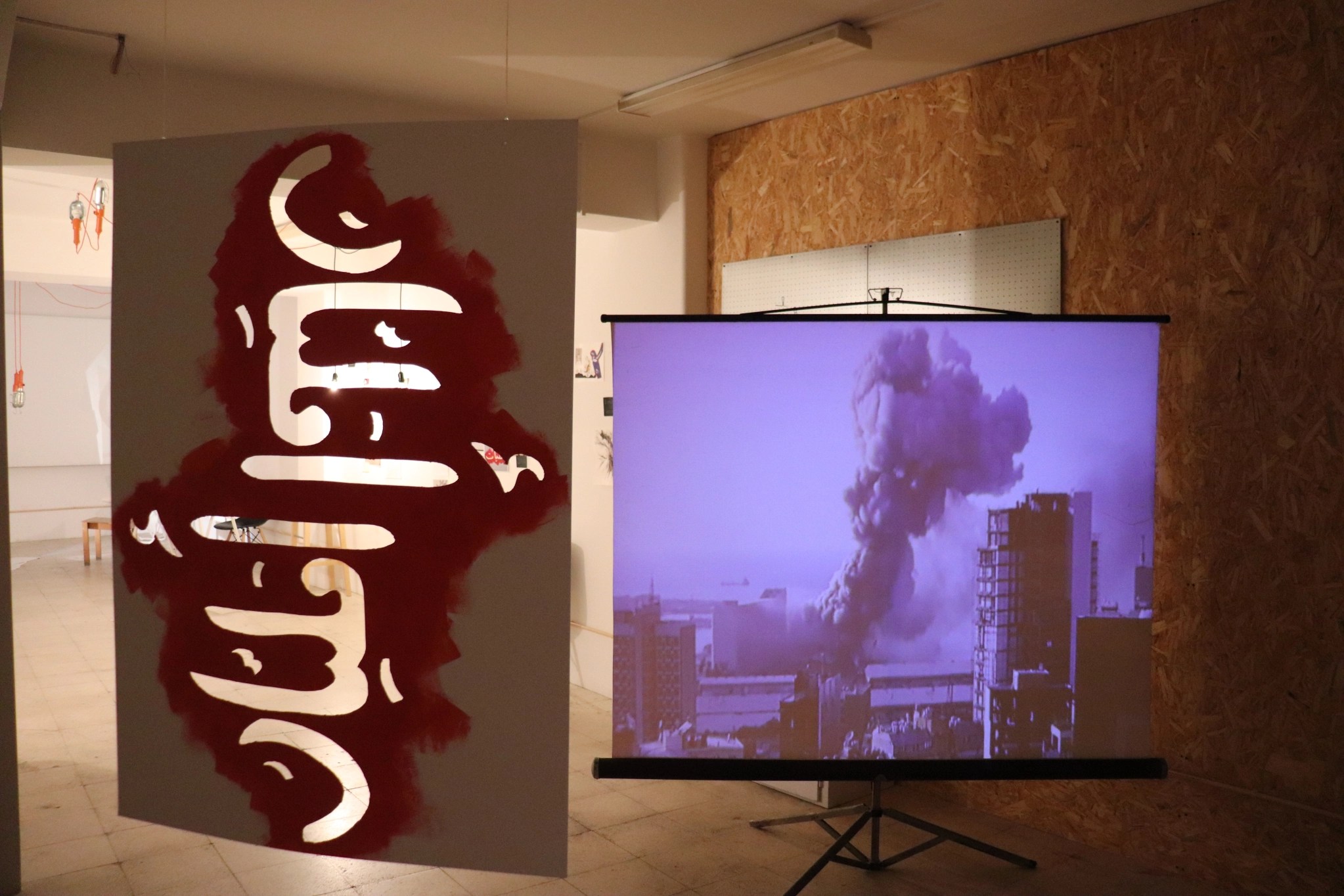
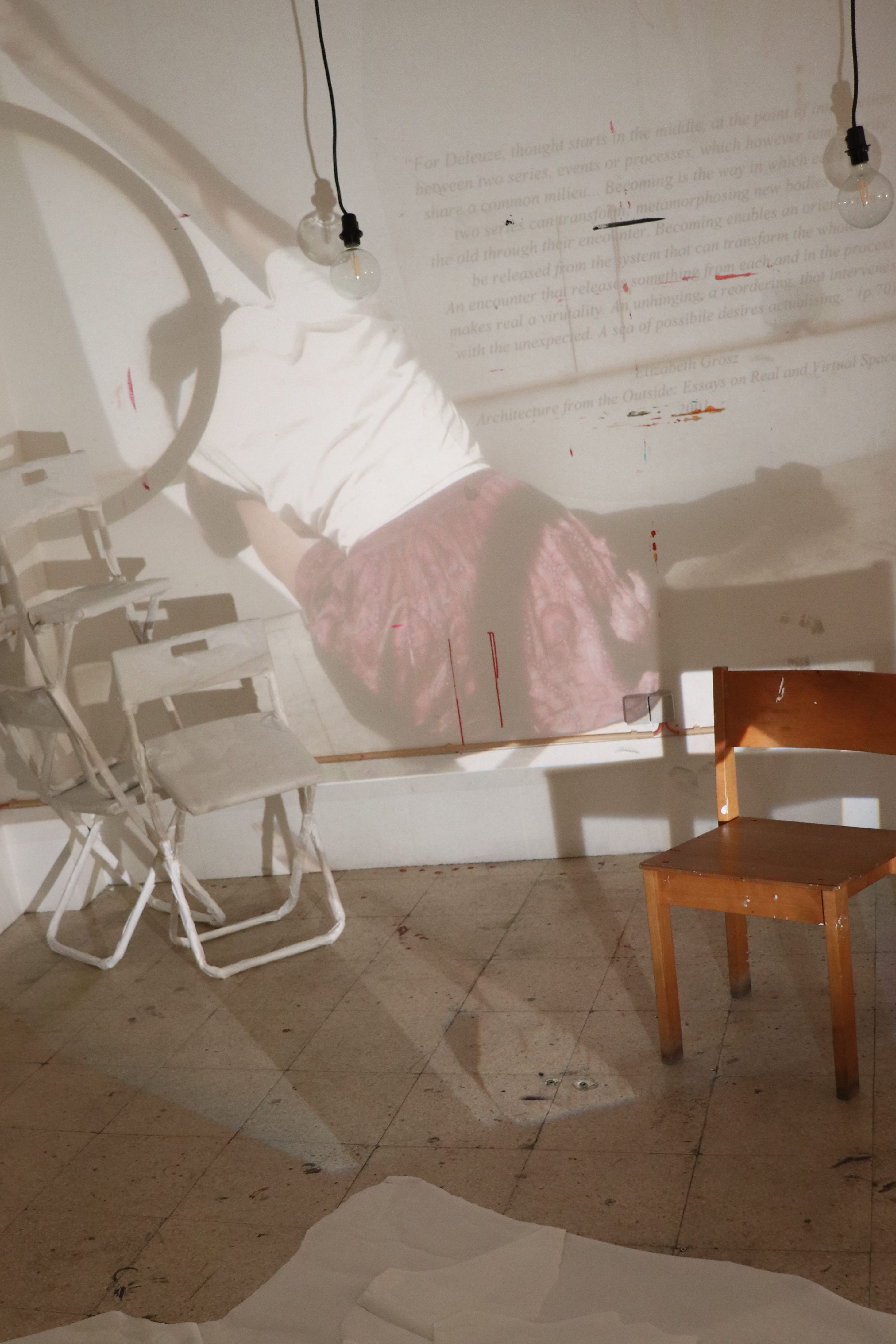
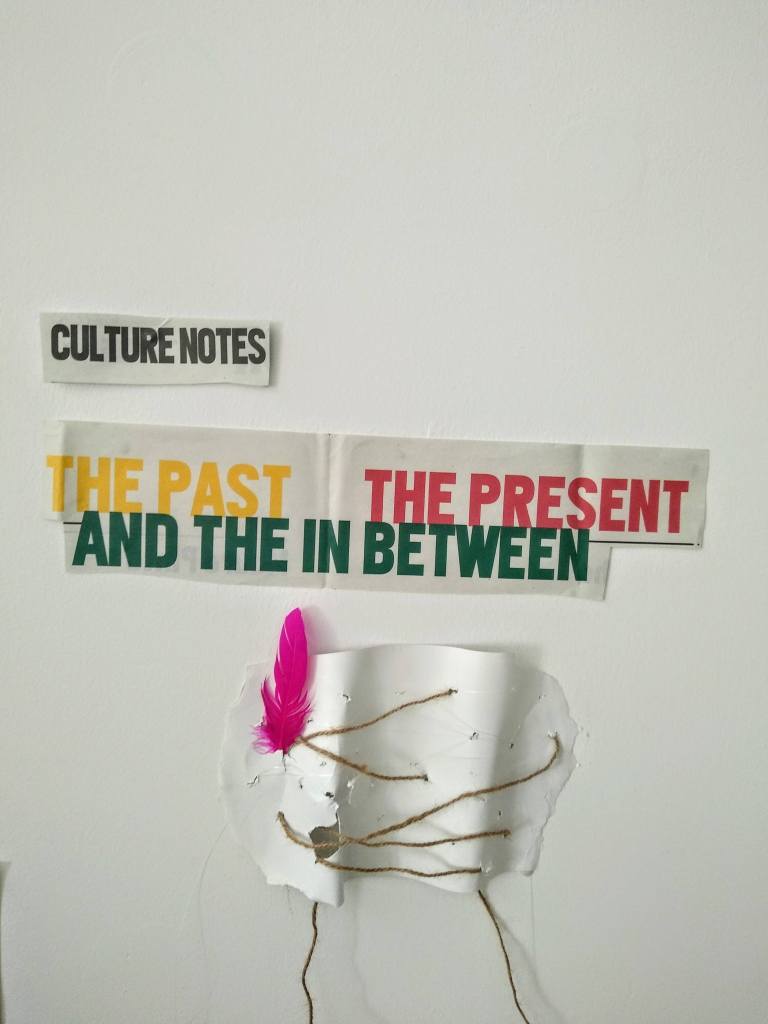
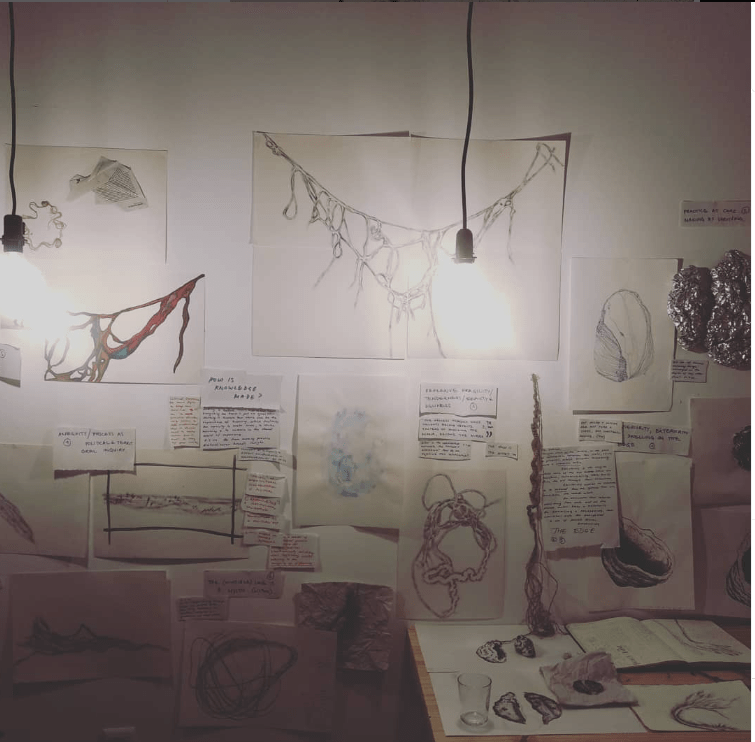
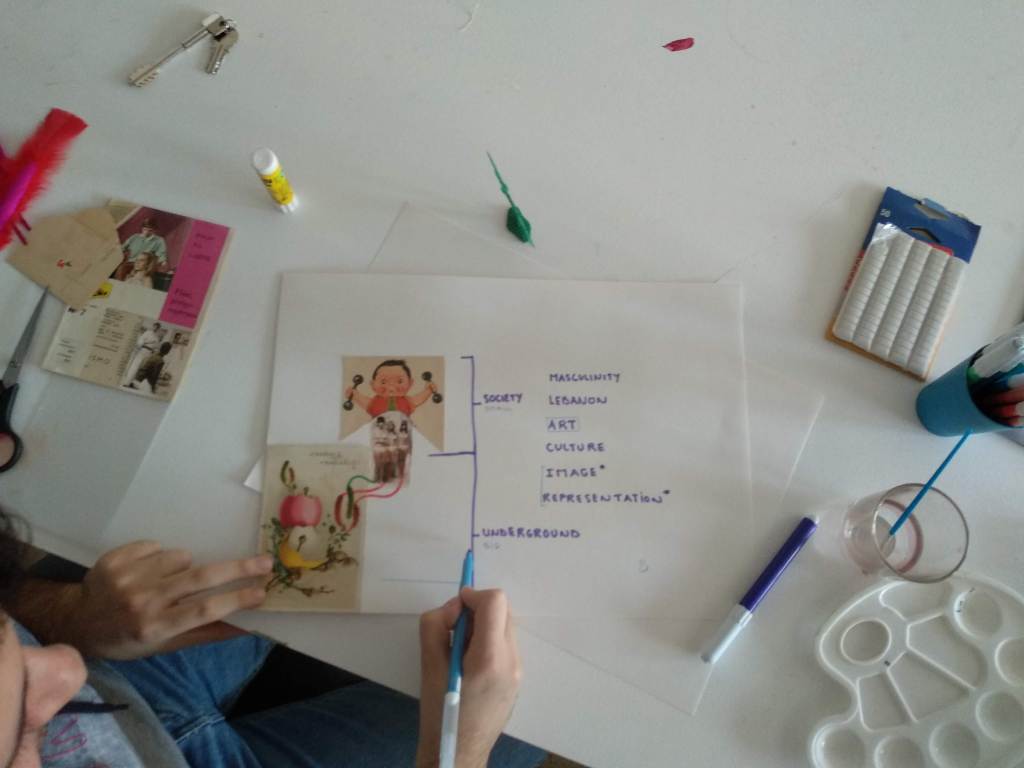
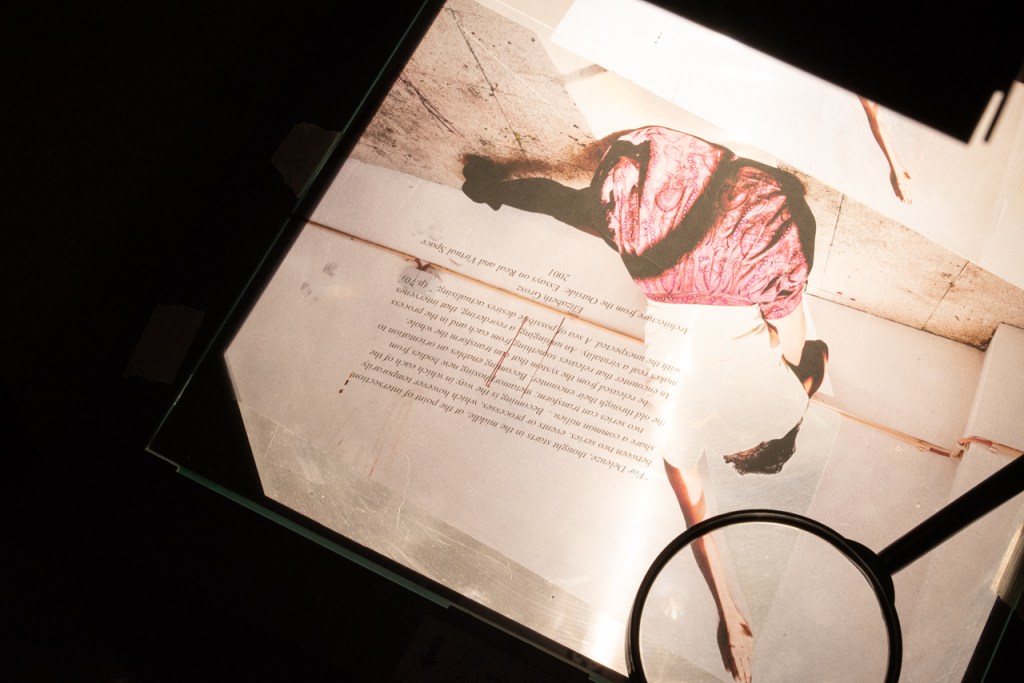
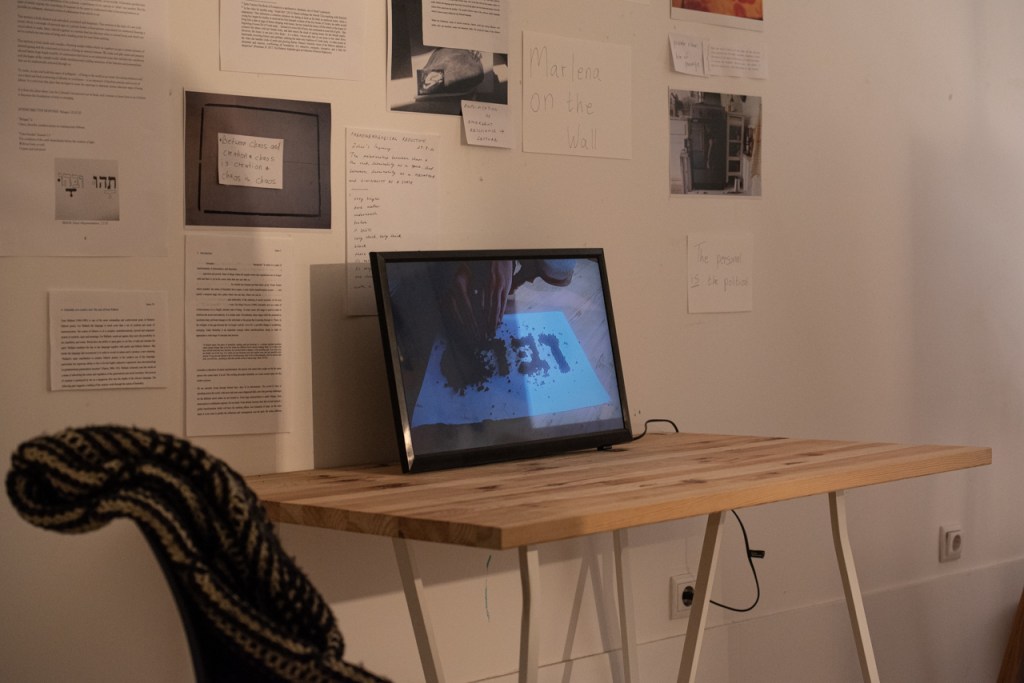
Research data include multiple forms of content and modalities of engagement including archival image and text, academic theory, personal experience and histories, media and art objects, as well as emergent phenomena (such as the conditions ushered in by COVID-19). Modalities varied between all forms of visual art (collage, drawing, text, sculpture), sound, performance, voice/oration, video and photography.
Examples of research artifacts:

Exhibition
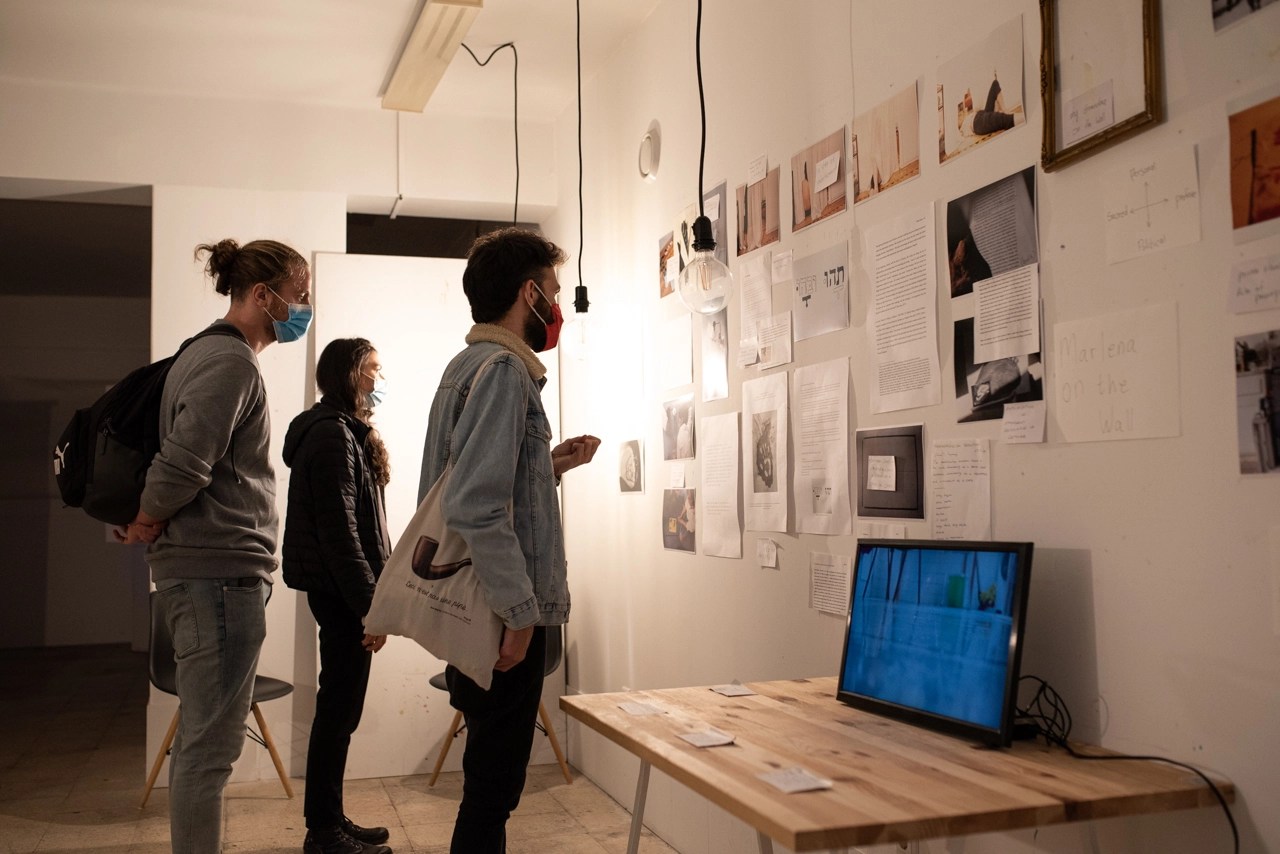
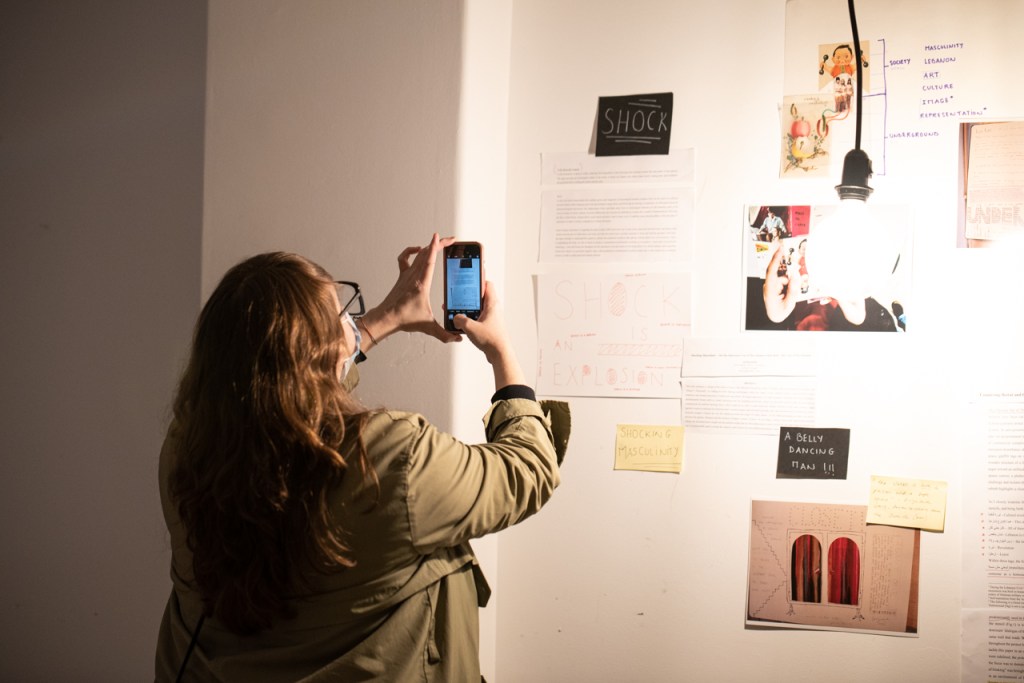
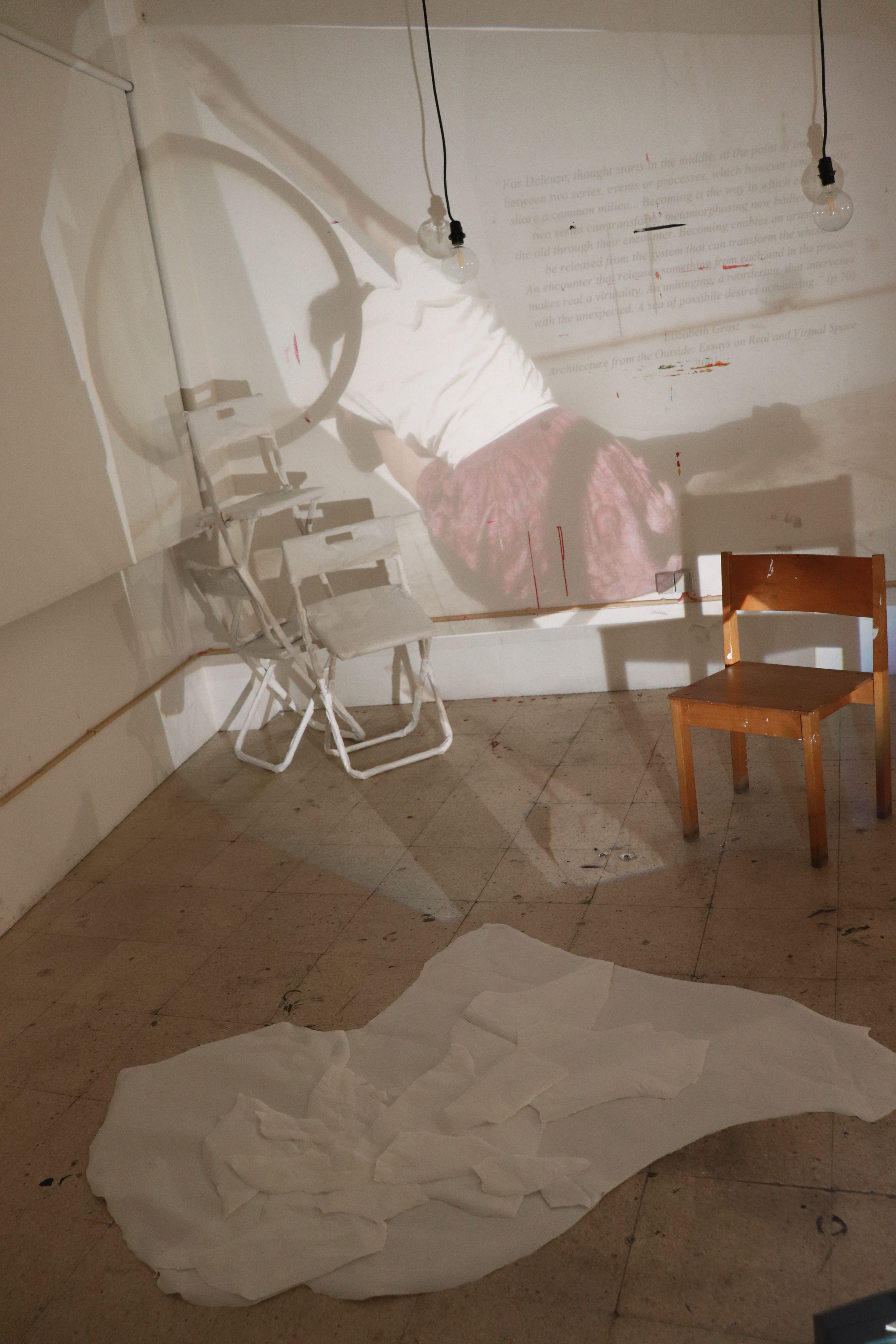
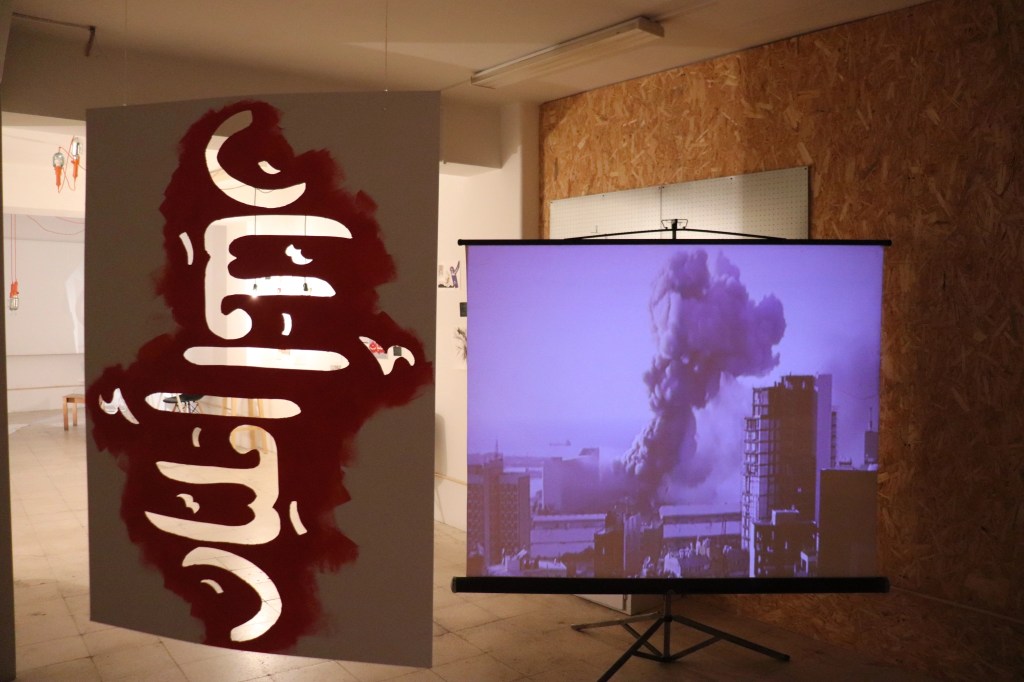
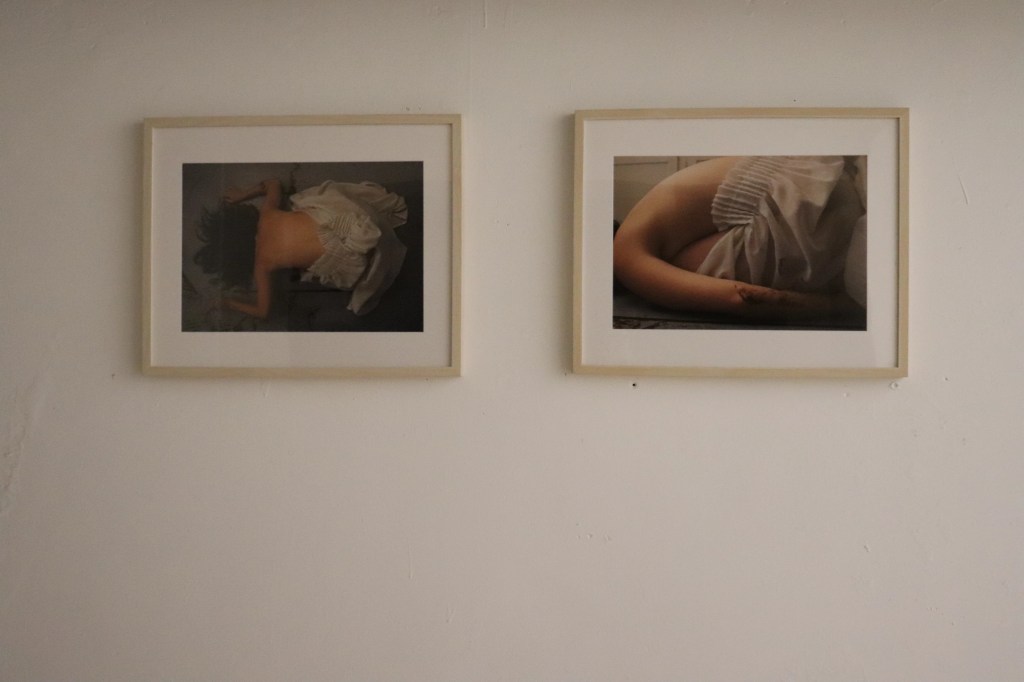
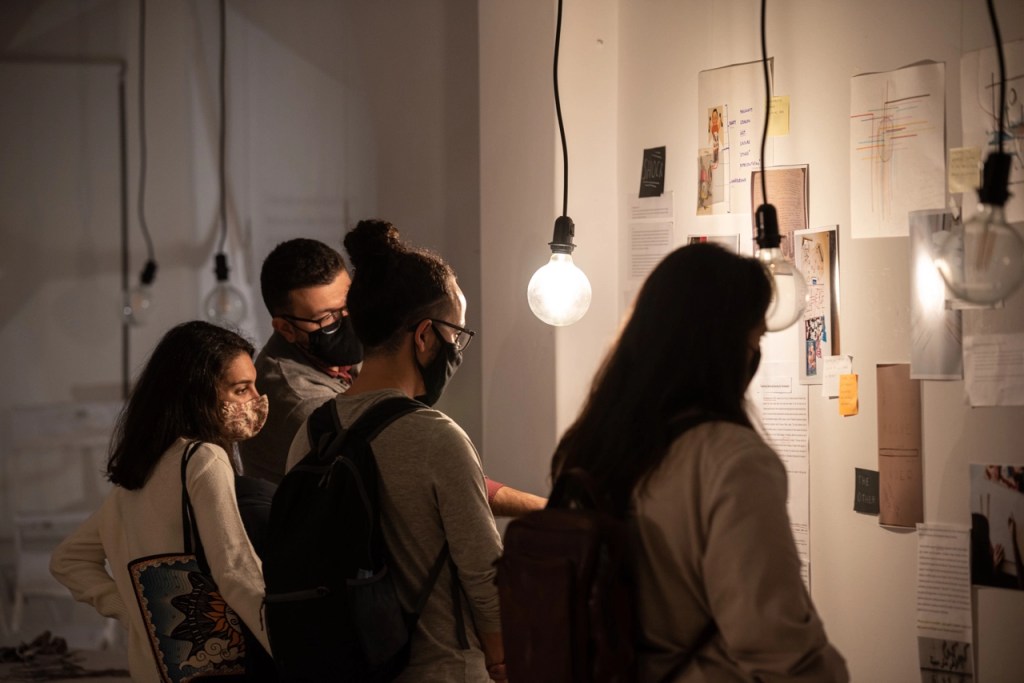
The exhibition was held over two floors at the Hangar Centre for Artistic Investigation in Lisbon, Portugal. It included the presentation of two walls of research maps developed by each inquirer in engagement with the facilitator to demonstrate where and how academic ideas had translated into alternative forms of knowledge using arts-based methods.
‘…the human body is defined in terms of its property of appropriating,
in an indefinite series of discontinuous acts, significant cores which transcend its natural powers.
This act of transcendence is first encountered in the acquisition of a pattern of behaviour,
the in the mute communication of gesture: it is through the same power that the body opens itself to some new kind of conduct and makes it understood to external witness.
Here and there a system of definite powers is suddenly decentralized, broken up and reorganized
under a fresh law unknown to the subject or to the external witness,
and one which reveals itself to them at the very moment at which the process occurs.’-
Phenomenology of Perception, Maurice Merleau-Ponty 1962 (174)


Accompanying Events
Plurality as Practice – Reenvisioning the role of the researcher in a destabilised world
This online talk explored the changing role of the artist and the researcher in a post-pandemic world, exploring the nexus of knowledge-making, artistic practice and research as a modality. Focussing on the work the year-long collaborative research-based residency – An Indefinite Series of Discontinuous Acts – and exhibition at the Hangar Centre for Artistic Research, this online talk explores how participatory practice, relational aesthetics and a cross-disciplinary exploration of alternate models of knowledge-making might speak to the needs of a rapidly destabilising world.This project is supported by the Ian Potter Cultural Trust (Australia).
Introduced by Luisa Santos, Artistic Director, 4Cs
Moderated by Cristian Tejo, Independent Curator & Project Supervisor
Researchers: Nithya Iyer, Jad Khairallah & Zohar Iancu
Research film: Alternative Knowledge in the Making – Between academic research and artistic investigation
In the early days of 2020, the artist and interdisciplinary researcher Nithya Iyer invited PhD researchers Jad Khairallah and Zohar Iancu to forge a collaborative experimental research project. Two weeks after starting their shared work Portugal went into lockdown, but the research process continued. This film explores the year-long creative journey that accompanied this project, which brought academic research into dialogue with artistic investigation and phenomenological practices. Exploring reflexive, critical, academic, and creative research methodologies, the film wishes to promote a brave discussion regarding the possibilities and challenges of creative academic research methodologies within current cultural and political settings. The project stems from a questioning of formal research practices: How can we reimagine research processes to include knowledges that lie outside traditional modalities and institutional framings? How can we share these alternate forms of research processes and outcomes? In November of the same year, only one week before the second lockdown, the three researchers presented an exhibition at the Hangar Centre for Artistic Investigation, Lisbon. Engaging in interdisciplinary and experimental scholarship that blurred the margin between art and academia, Khairallah, Iancu, and Iyer explore the possibilities for alternate models of knowledge-making to be integrated into traditional forms of research-doing.
Presented at CONVIVIAL CULTURES | XI Lisbon Summer School for the Study of Culture
Findings and Conclusions
Thesis abstract:
What does it mean to be an artistic practitioner amidst a pandemic? How does an artistic practitioner witness and approach decoloniality? What role models are available for the emerging plurality of the artist as companion, as inquirer, as researcher? What frameworks are available to contextualise practice to remain persistently attentive to change and uncertainty? These are some of the questions that arose for me during the course of my placement in 2020 and which I have queried through the experiences and practices discussed within this paper. Using records of inquiries, as well as my own intersubjective responses and scholarly research, I illustrate how this placement has shown me: the vital nature of artistic practice as care and survival; the potential of artistic practice to articulate meaning amidst ambiguity and uncertainty; the presence of the Colonial Unconscious and a means to address this through the methodological framework of the Anthropophagy movement; and the plurality of the artistic practitioner as an agent of iterative reflexivity. These findings trace what I have come to know about the type of artist and practitioner I am, as well as the principles and concepts I wish to embody and prioritise in my practice going forward. The three chapter titles are chosen to represent the three overarching ‘islands’ of meaning, or thematic findings that have revealed themselves through the course of placement.
1: PRACTICE AS SURVIVAL /ARTIST AS PRACTITIONER.
2: AMBIGUITY AS PROCESS; PROCESS AS POLITICAL AND TERRITORIAL INQUIRY; POLITICAL AND TERRITORIAL INQUIRY AS DECOLONIAL PRAXIS
3: INTERIORITY/EXTERIORITY AND DWELLING ON THE EDGE
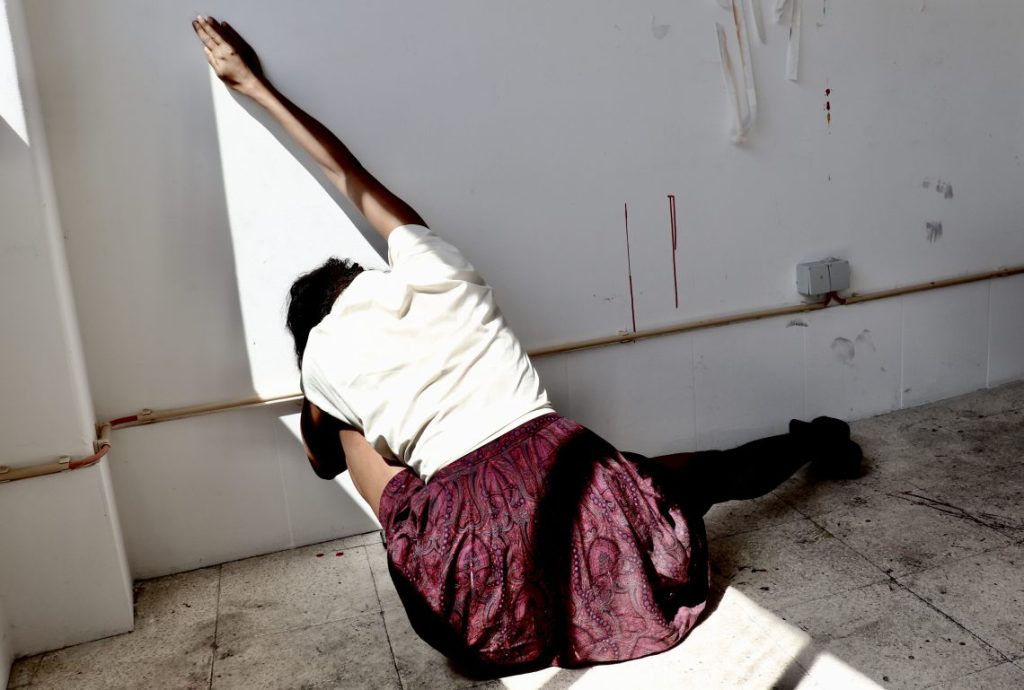
Masters thesis creative synthesis: ‘An Indefinite Series of Discontinuous Acts’, 2020
 NITHYA IYER
Leave a comment