Kai Vēlai
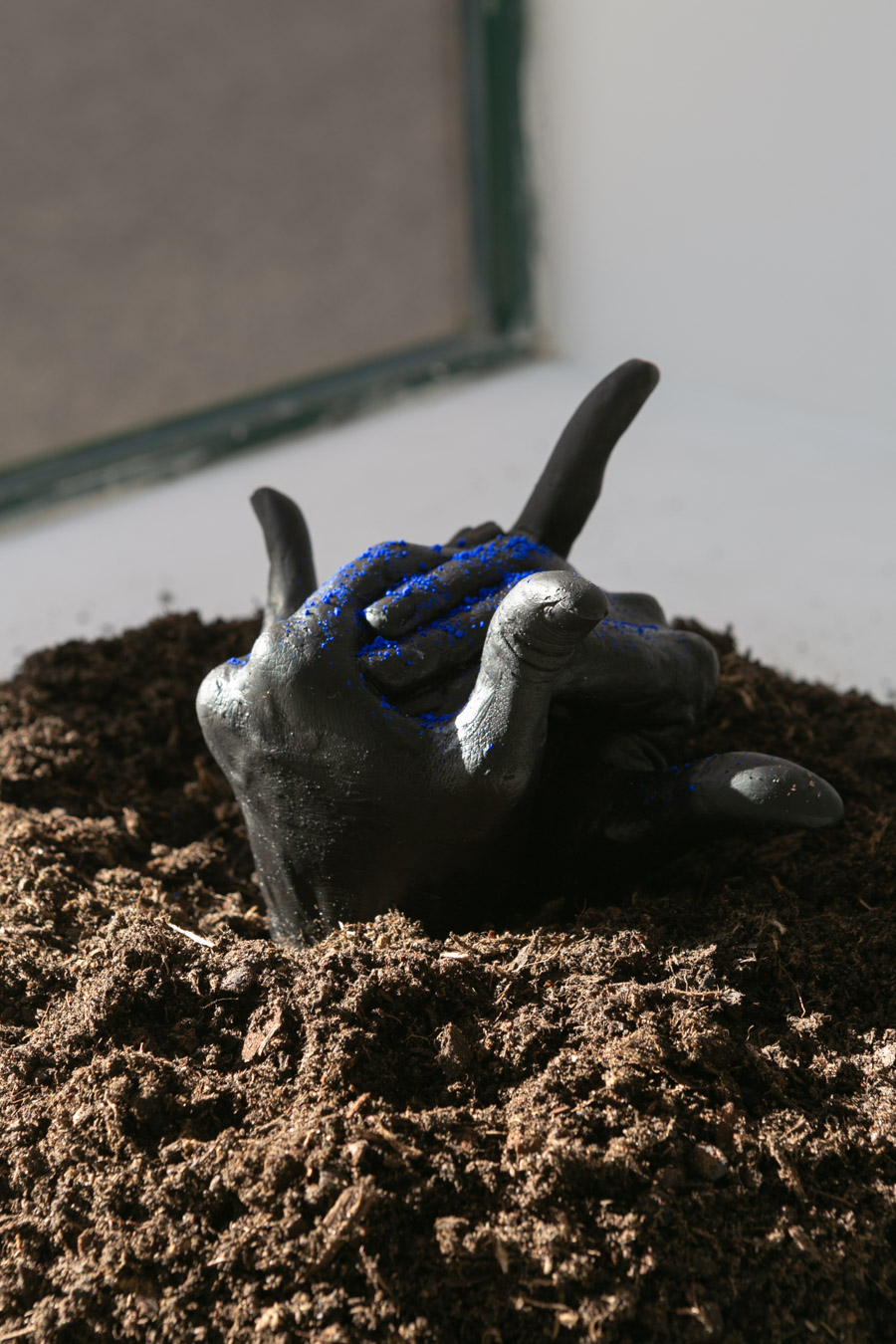
10 hand casts in alginate; acrylic; soil; pigment.
Kai Vēlai, translating from Tamil to ‘hand work’ or ‘work to be done by hand’, refers to the potential of embodied sigils to cultivate agency. Mudras, or hand gestures, are used in both Indian dance forms and the practice of yoga asana to signify symbols and imageries in the telling of stories, in the former, or the alignment of meridian points, in the latter. In Kai Vēlai, a series of newly created mudras and mudras recast in new meanings are used to represent the key principles of navigating one’s ancestral relationships.
The Hindu goddess Durga, the fierce demon-slayer, is revered in her form as having ten arms holding ten weapons with which to fight her enemies. The ten mudras of Kai Vēlai, can be considered the ‘weapons’ with which the artist seeks to approach the tense landscape of inheritance.
In developing these works, the artist encounters and acknowledges the contentious cultural discourse regarding the dance form of Bharatanatyam and its relationship with Indian feminism, caste politics, nationalism and decoloniality. As such, this contention is also considered as part of the artists inheritance as a contemporary disciple of Bharatanatyam.
These mudras grow upwards, from the ground, denoting their entrance into the world from the space of an alternate territory or the Sita (as featured in Sita means furrow). They are painted black, a nod to Durga’s most famous avatar – Kali, the goddess of darkness, destruction, death and rebirth. They are incarnations of alterity emerging from the void. Their anointment in the famously unstable Ultramarine pigment testifies to their volatile and mutative nature.
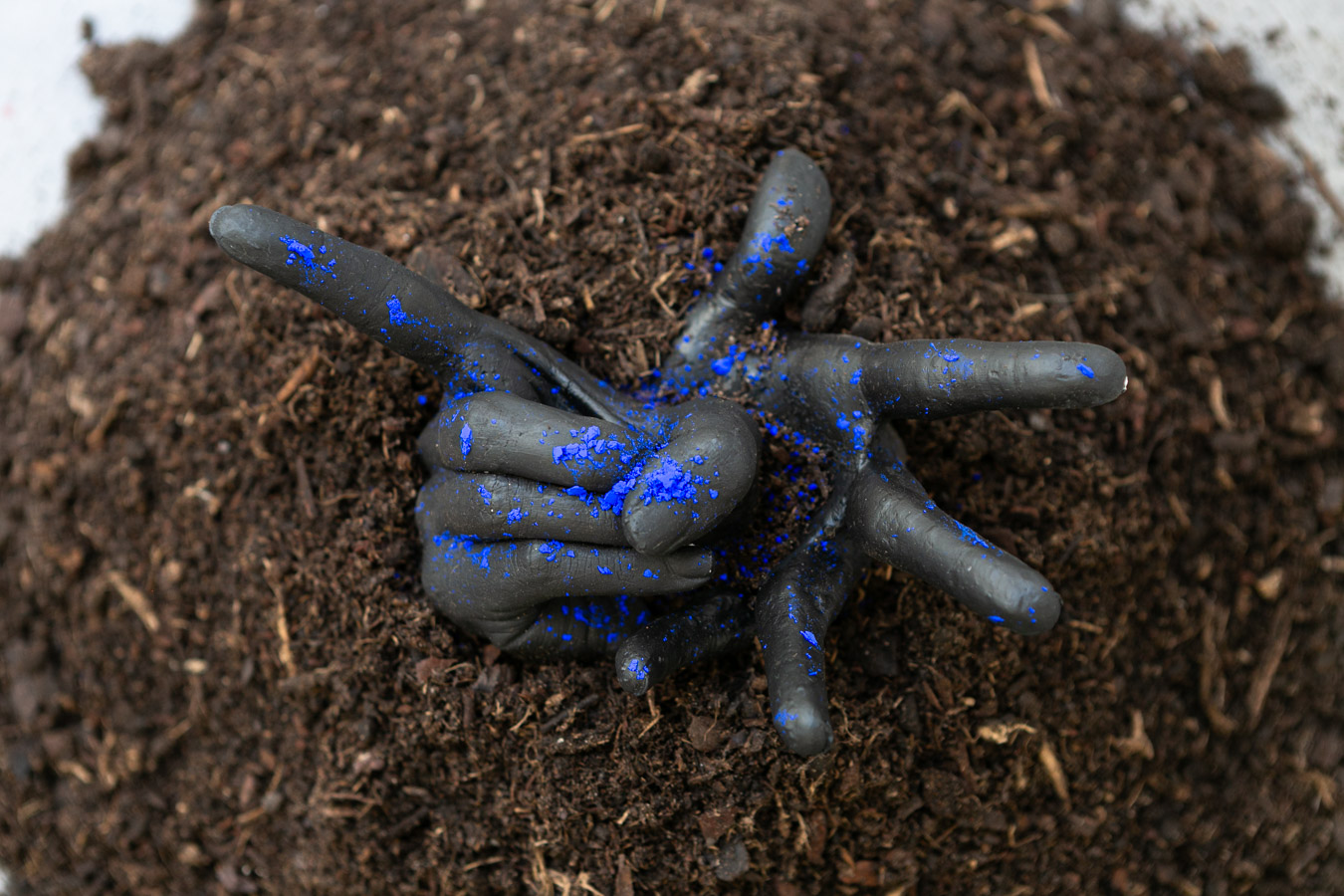
journey between birth and the void
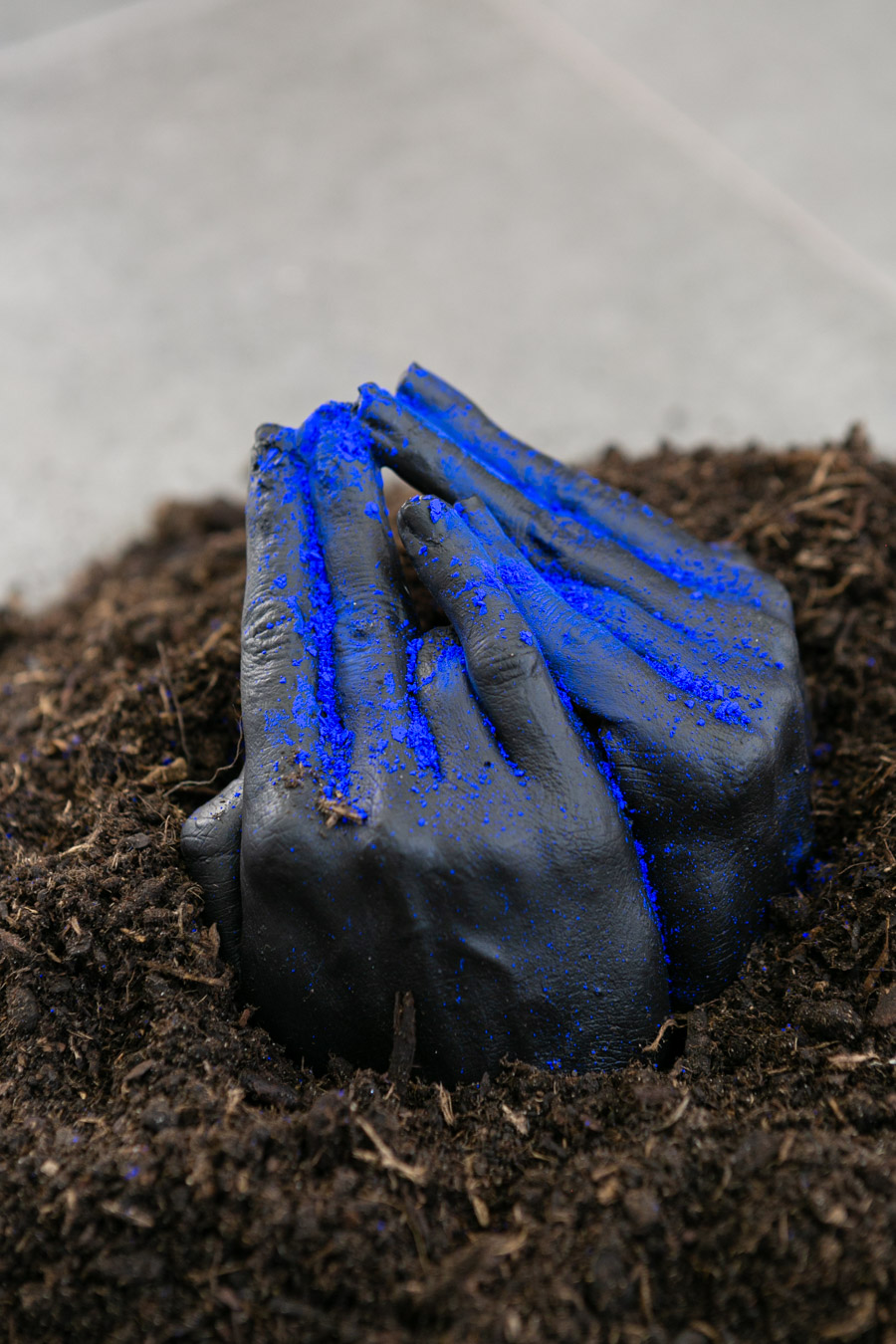
largely censored from mainstream Indian dance,
representing the female erotic principle.

combines the mudras for enemy and friend, denoting the contradictory nature of relationships with inheritance.
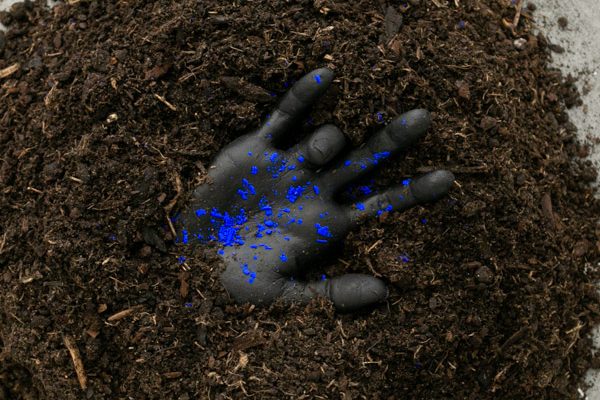

to show a flag, denoting the lines on one’s own palm as
indicative of their belonging.
 NITHYA IYER