LAZULI#002FA7
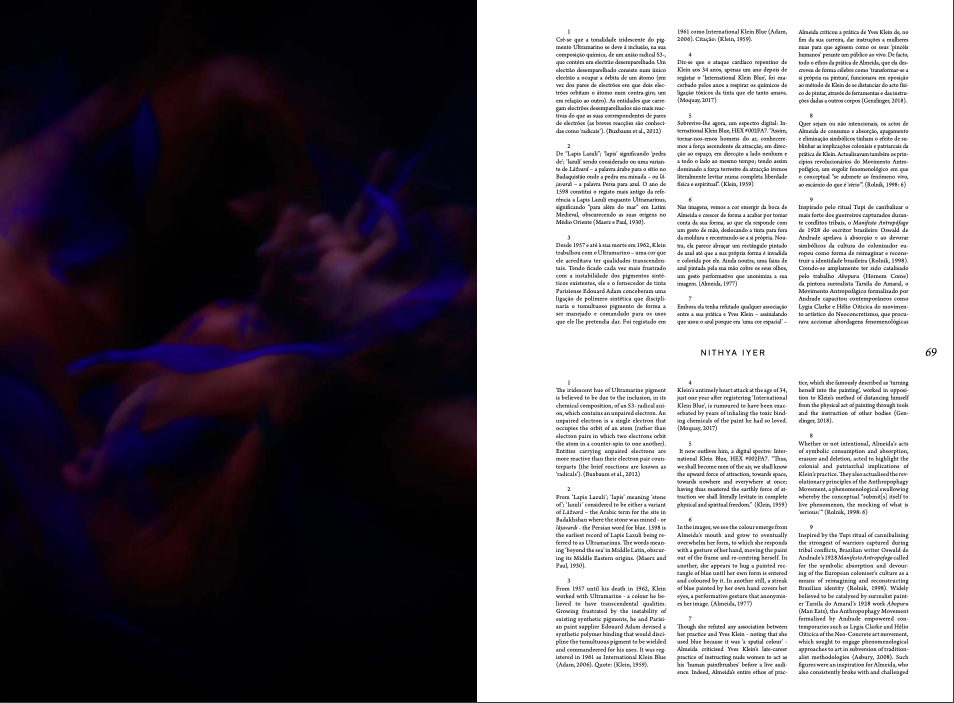
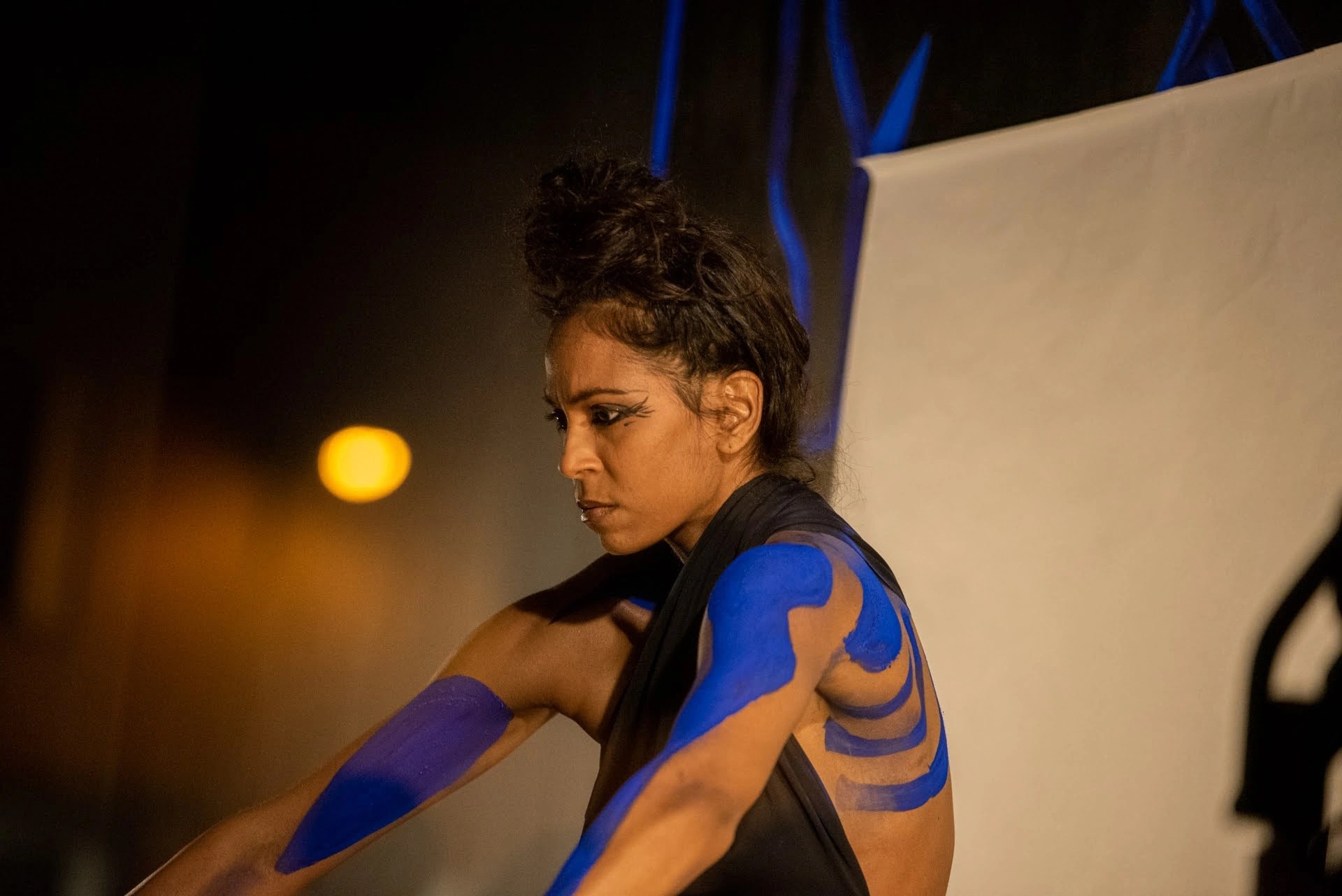
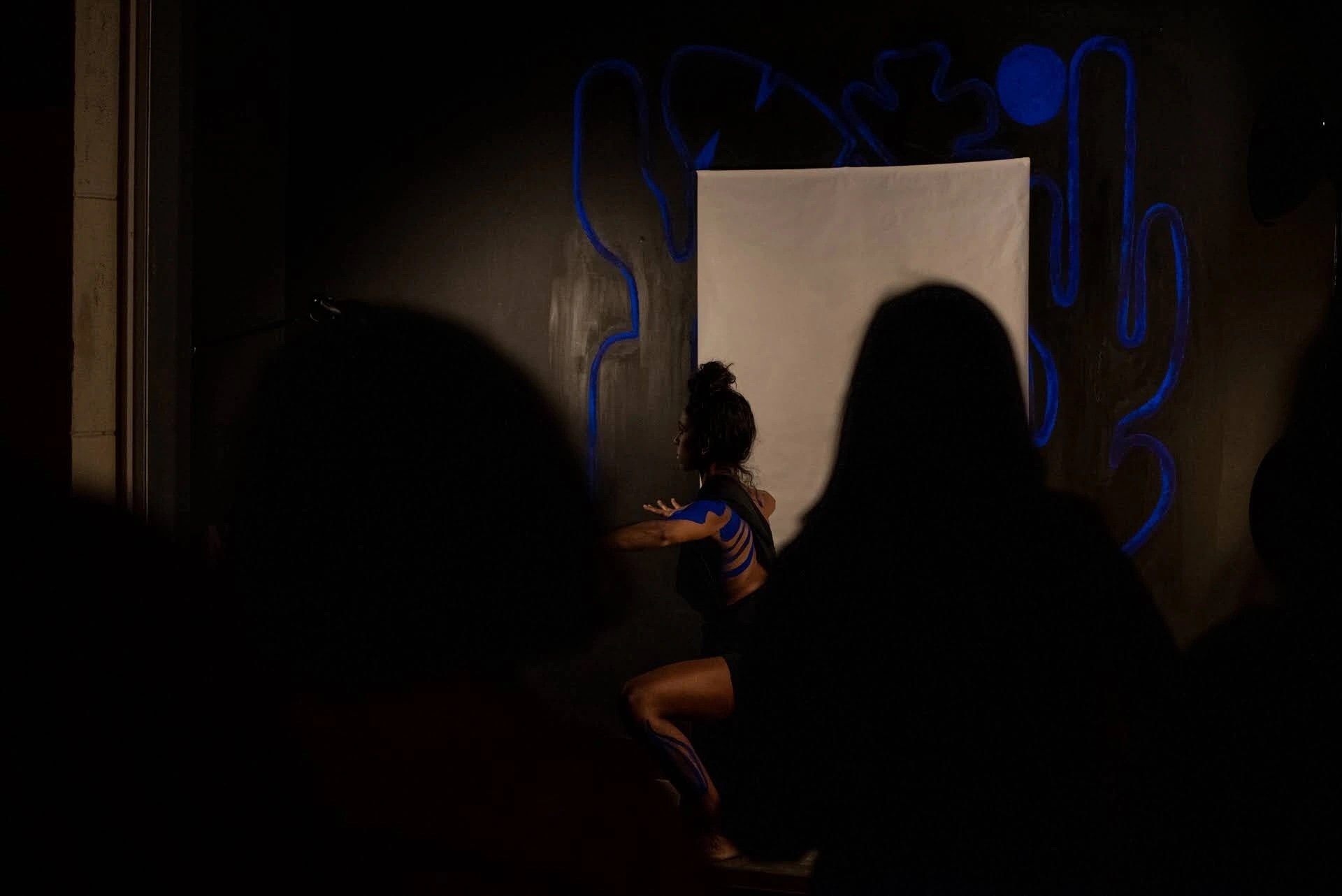
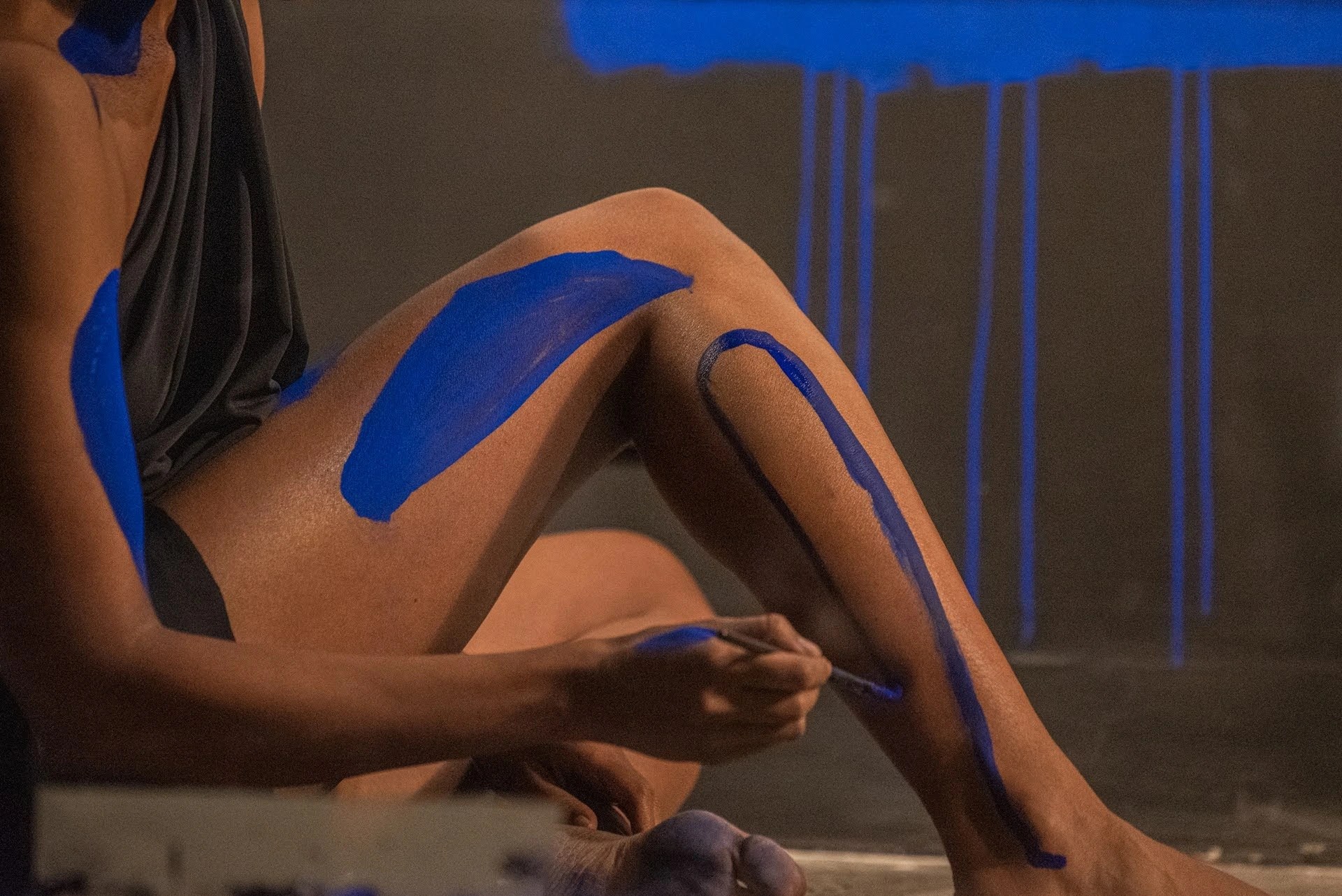
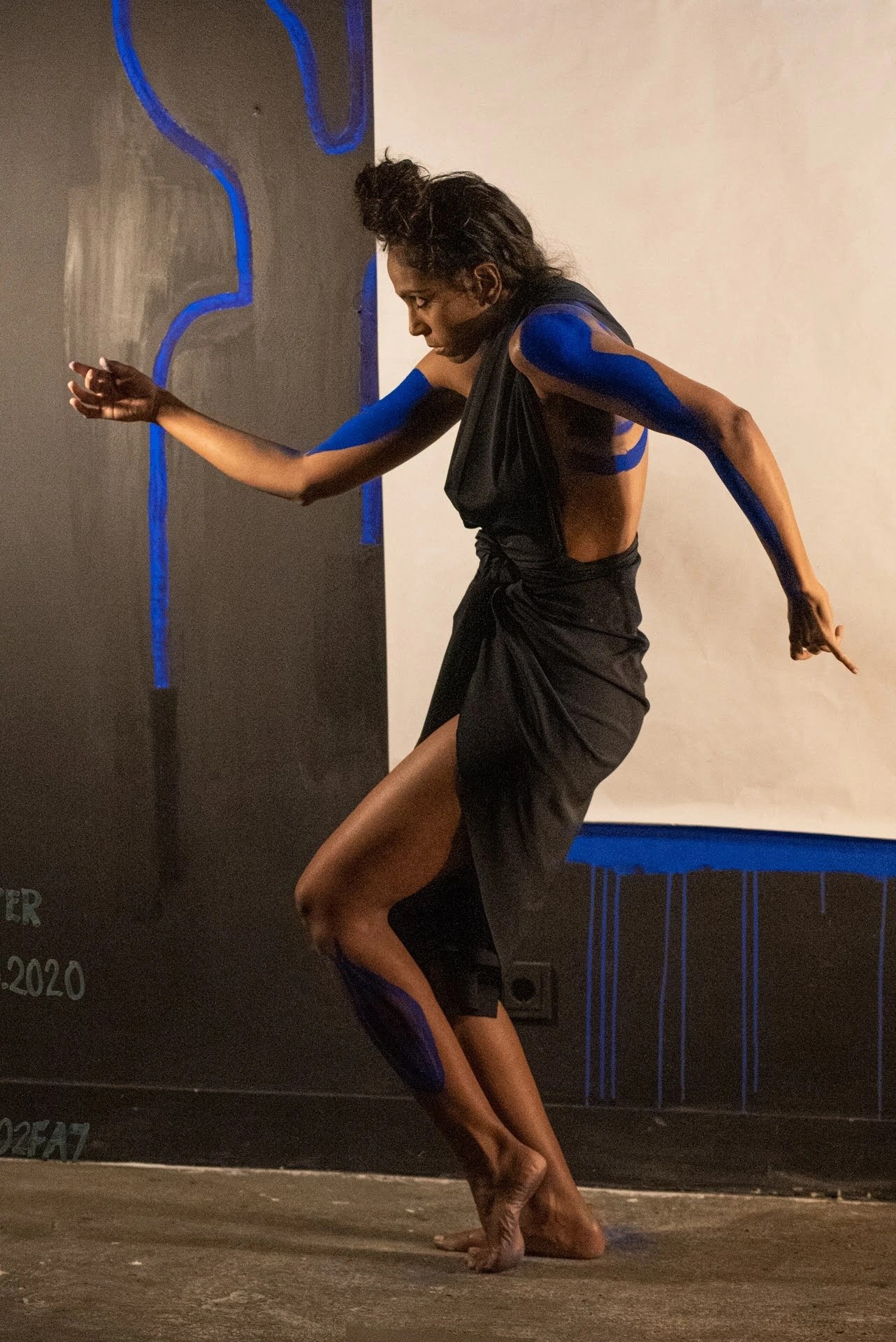
Examining the lineage of the colour ubiquitously known as Ultramarine, this performance-installation engaged the painted body in dialogue with poetic verse to trace the contentious history of this hue. Commencing from its birth in the mountains of Badakhshan, Afghanistan, as Lapis Lazuli, it was imported across the mediterranean as Ultramarine – or ‘Beyond the Sea’ – and eponymously appropriated by French painter Yves Klein. In the present day, the colour is immortalised as International Klein Blue under the HEX code #002FA7. The work highlights the lifeline of this colour as a metaphor for colonisation, capitalism and patriarchy.
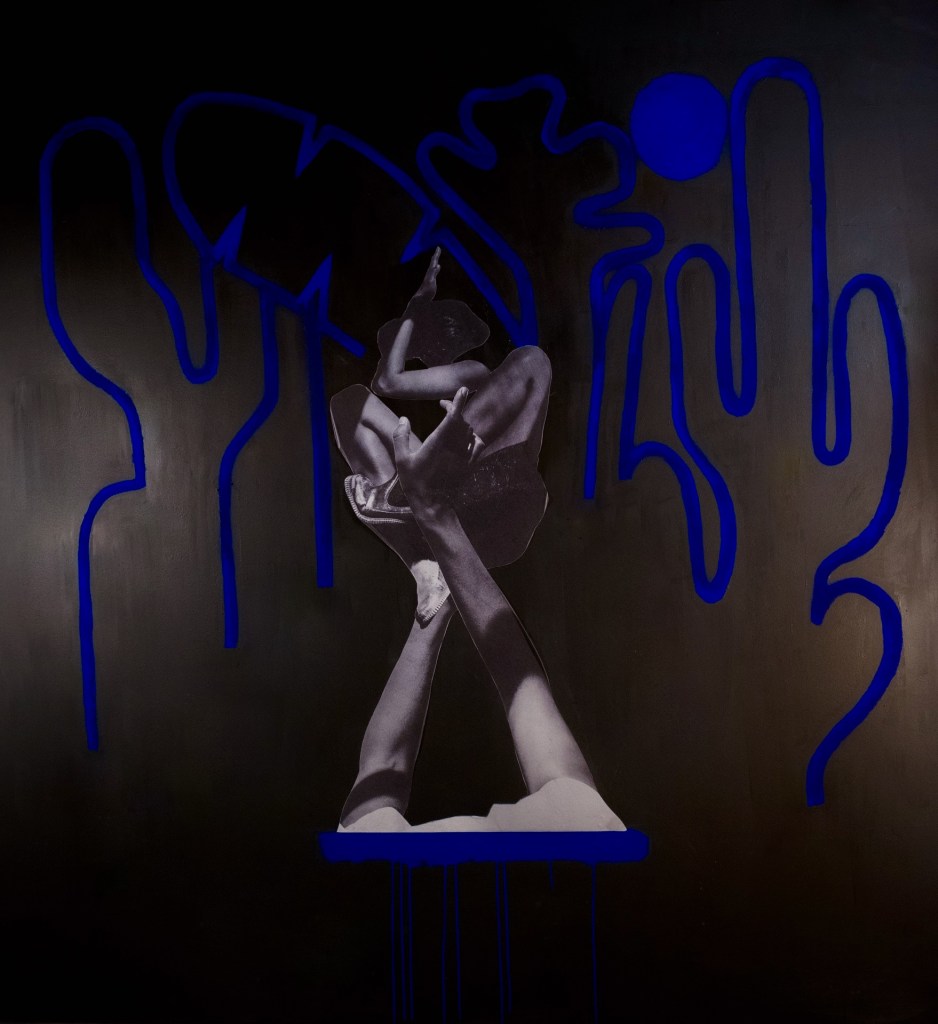
The mural collage that was activated through the performance is in homage to Portuguese artist Helena Almeida who, in her 1977 work ‘Study for Inner Improvement’, appears to ingest the famous hue in an act widely lauded as a feminist subversion of the patriarchal hubris espoused by Yves Klein; the artist controversially painted nude women with his patented binder and directed them to move their bodies on canvas. Almeida’s act – consistently denied by the artist as a reflection of the Frenchman’s blue – nevertheless represented a performative reclamation and an enactment of the Anthropophagy Manifesto of Oswald de Andrade. The iconic text which inspired a generation of Brazilian artists to reclaim their identities through the symbolic devouring of the European coloniser’s culture informed Almeida’s predecessors such as Lygia Clarke and Helio Oitica, and thus signifies the ongoing imprint of a revolutionary concept.
Can a colour be colonised to imbue certain subjectivities? If so, what does it mean to ‘eat’ those subjectivities and reconstitute them through agentic acts of bodily transformation? What does it mean to wield this colour upon my own skin? To enact it with the force of performative agency and challenge its ownership?
Nanogaleria Publication
Published for Nanogaleria by 4Cs Project, European Cooperation Programme.
Accessible via this link.
 NITHYA IYER