Vidhī
10 Photographic prints on
fine art paper; Oil paint;
Black pigment; 33×48 cm
each.
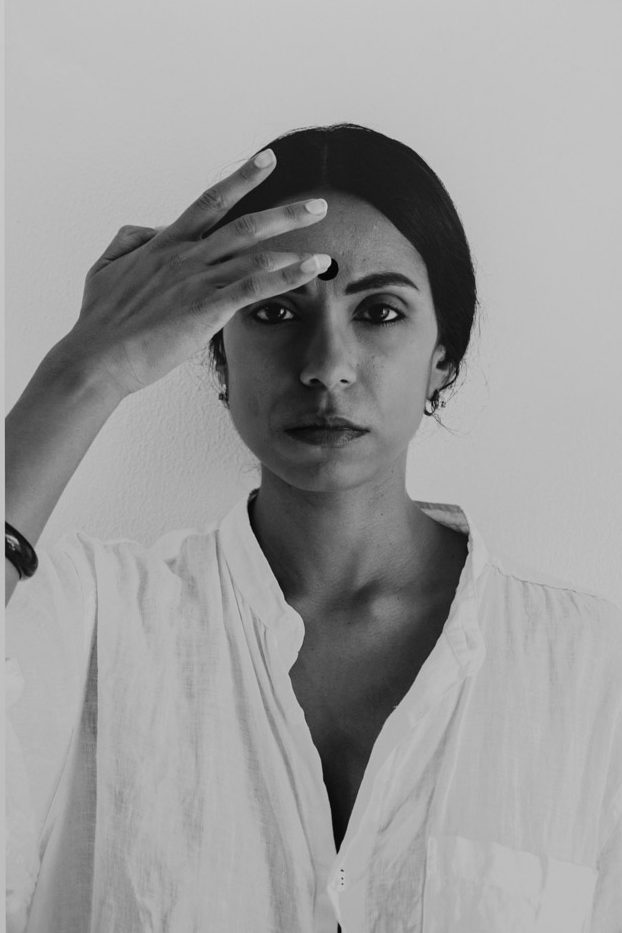
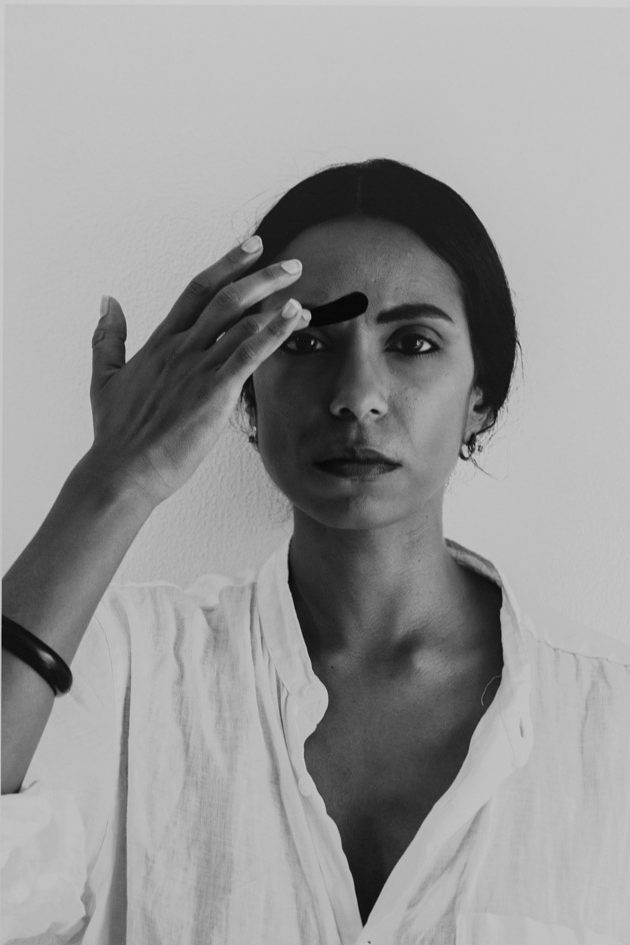
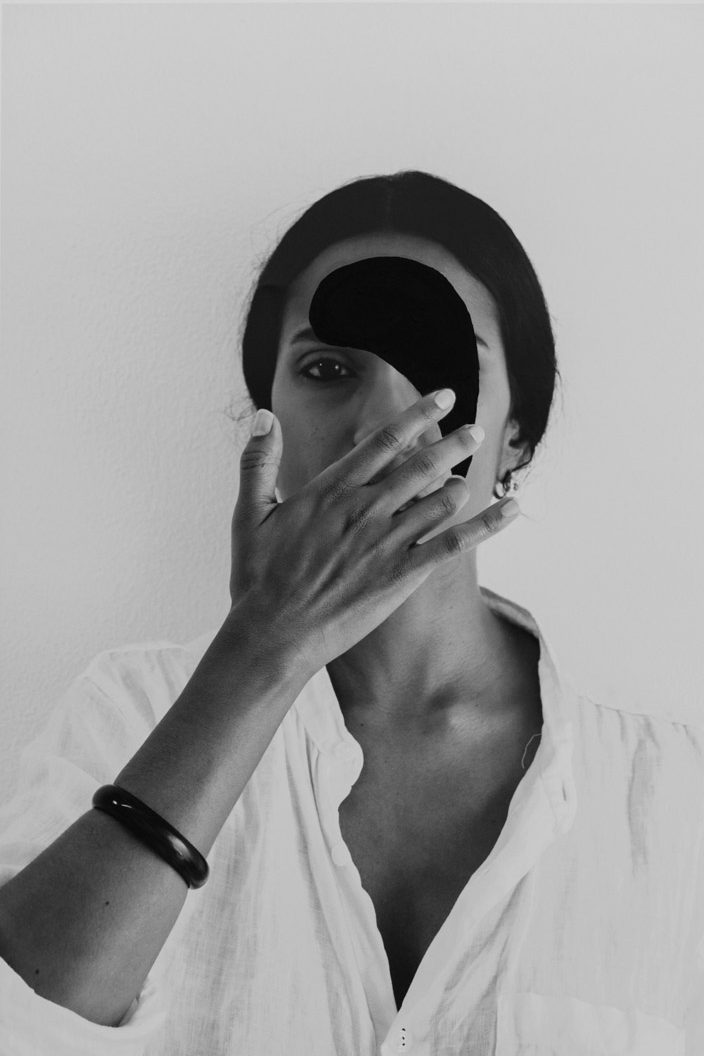
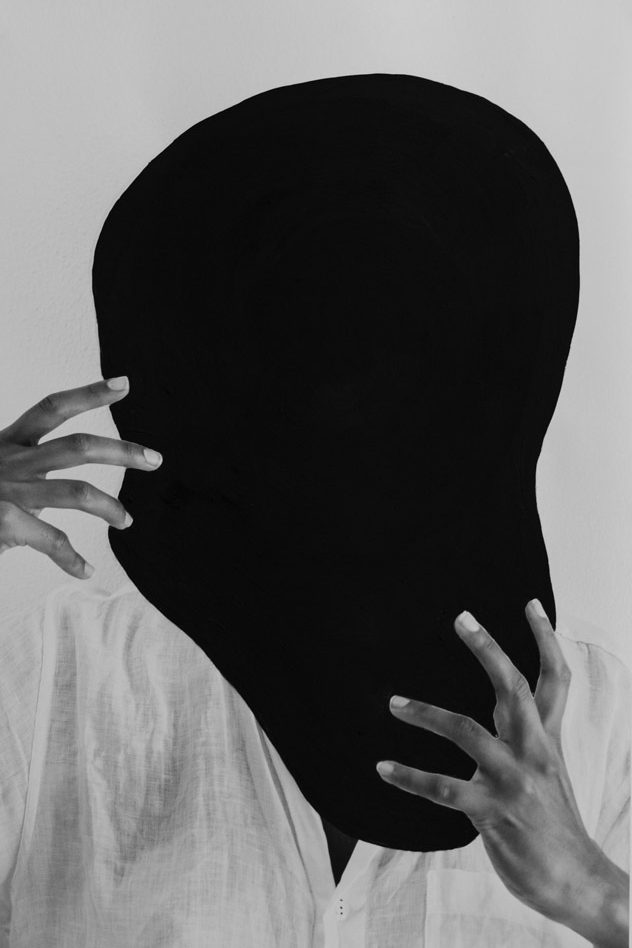
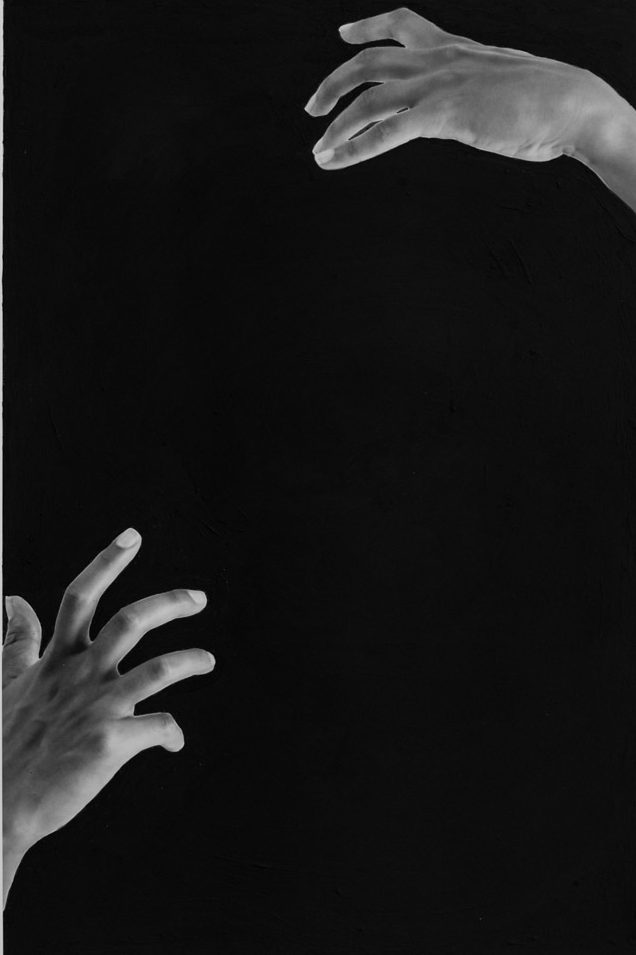
Vidhī means ‘destiny’ or ‘fate’ in Tamil, a force that is often spoken of in South Indian culture as being ‘written on your head’. In these works, the ‘pottu’ – the traditional forehead marking of the third-eye for Hindu women – is depicted as an entry-point into a void, or an undetermined state of expansion or erasure. In this way, it suggests a tension between individual agency and preordained destiny.
The images draw on the technique devised by the Portuguese artist Helena Almeida, a contemporary of the Anthropophagic Movement of Brazil. As such, they seek to locate the thesis of the Anthropophagic Manifesto – the call to resist the culture of a colonising force through the consumption and reorganisation of that culture through ones’ improvising body. This work suggests that to ‘cannibalise the colonizer’ in a diasporic body may mean to cannibalise one’s self.
In this sense, the apparent headlessness of the form is inspired by Chinnamasta: the headless goddess of Tantra who removes her own head and consumes and feeds her disciples with her own blood in a demonstration of achieving superhuman intellectual and the metapysical capacity of the god-head.





 NITHYA IYER